
Mental health guide
Anxiety and Stress Management: Practical Ways to Feel Calmer Every Day
Learn how stress and anxiety can differ, how to notice common signs, and practical calming techniques and daily habits that may help you cope.
Share this article
Your mind feels overwhelmed after a long, tiring day. It replays a conversation at midnight. Your shoulders feel tight, and you cannot remember the last time you felt fully relaxed. If that sounds familiar, you are not alone. Learning about anxiety and stress management can make daily life feel more manageable.
In this guide, you will learn how stress and anxiety can differ, how to notice common signs, and which techniques may help in the moment and over time. You will also find out when it may make sense to talk with a professional. Think of these ideas as a simple toolkit you can try at your own pace.
This article is for general education. It is not a diagnosis or a substitute for individualized mental health care.
How are stress and anxiety different?
Stress is the body and mind's response to pressure, such as a deadline, a difficult conversation, or a money worry. Anxiety involves worry or fear about what might happen. It can continue after a stressful situation has passed, or show up without one clear trigger. Stress and anxiety can overlap, and either can affect how you feel and function.
Ongoing distress can affect sleep, focus, mood, and physical wellbeing. You can read more about physical symptoms that may occur with anxiety. These signs can also have other causes, so consider speaking with a health professional if you are concerned about them.
Good anxiety and stress management does not mean removing every stressful moment from life. It means finding ways to respond that feel healthier and more manageable.
Common signs of stress and anxiety
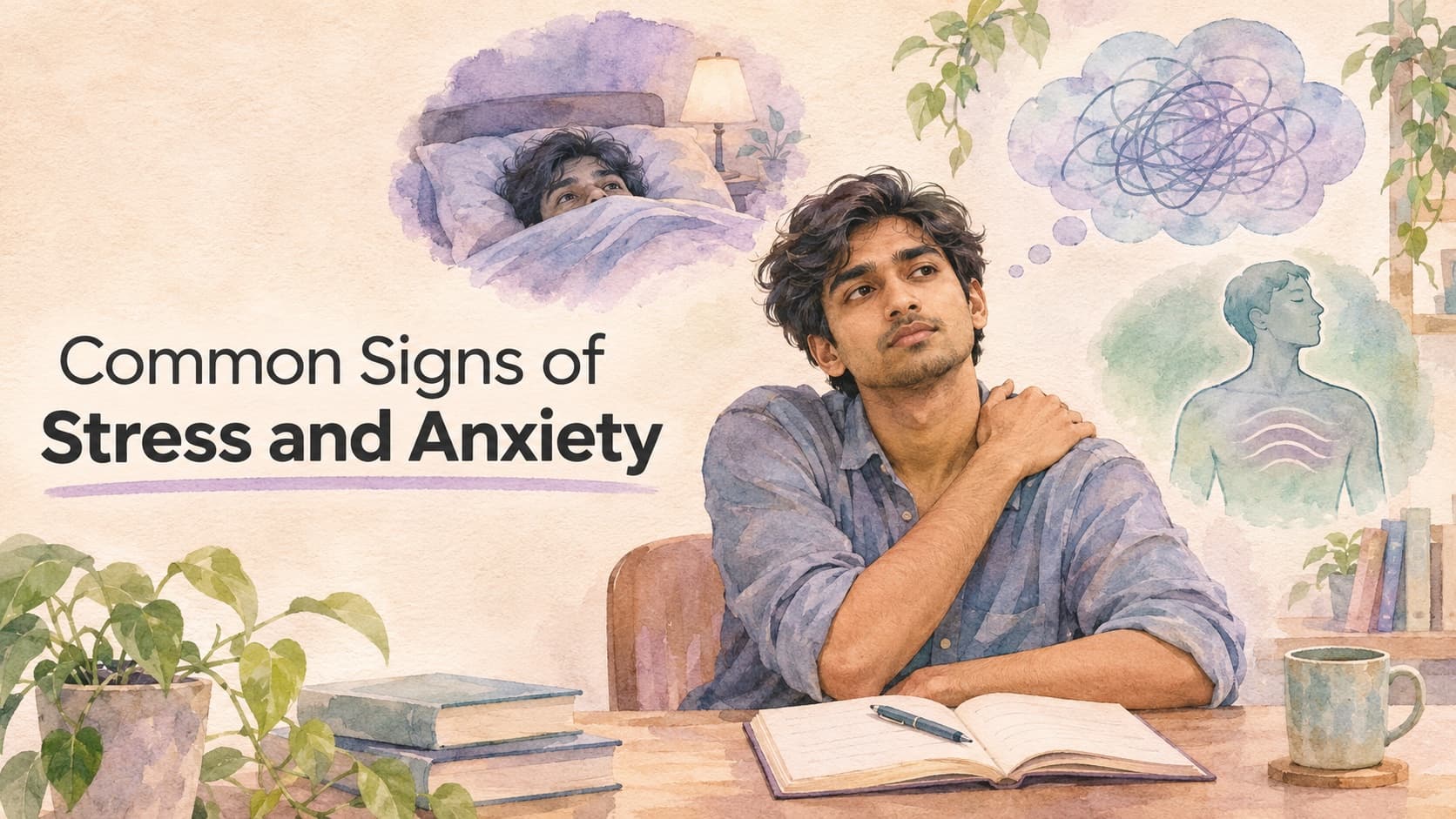
Stress and anxiety can show up in the body, thoughts, emotions, and behavior. Some people notice physical signs first; others notice racing thoughts or irritability. Common experiences include:
- A fast heartbeat, headaches, or an upset stomach
- Muscle tension, especially in the neck and shoulders
- Trouble sleeping or ongoing tiredness
- Racing thoughts, irritability, or difficulty concentrating
- Avoiding people, tasks, or places that feel overwhelming
These experiences can happen for many reasons and do not by themselves confirm an anxiety disorder. Consider getting support if they are intense, keep returning, last for several weeks, or interfere with work, relationships, sleep, or self-care.
Quick techniques to try when anxiety rises
When anxiety spikes, it can be hard to think clearly. These simple exercises may help you pause and bring attention back to the present. Try them gently, and stop if an exercise makes you feel worse.
Breathe slowly and comfortably
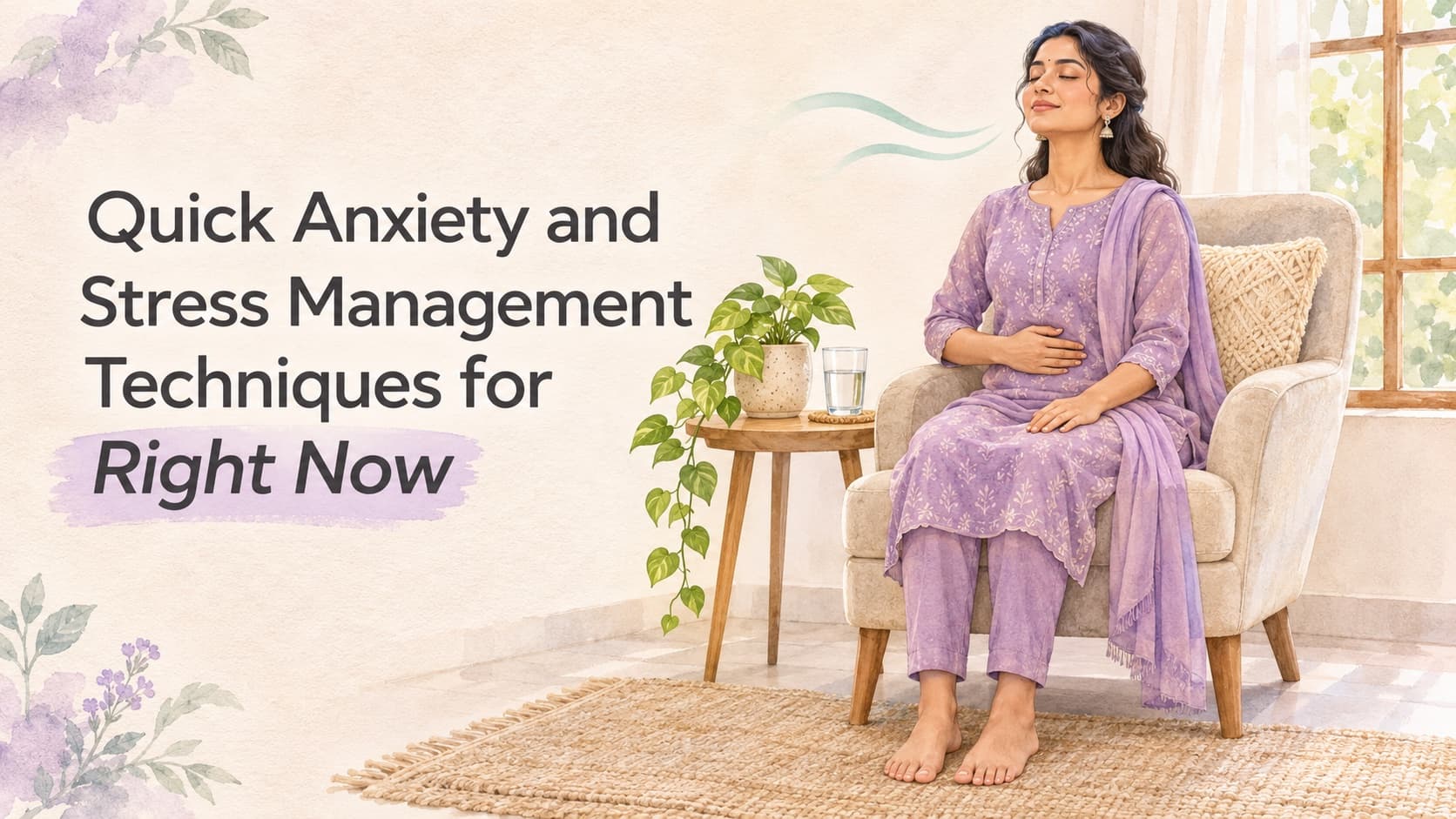
Sit or stand in a comfortable position. Let your breath move naturally, then try breathing in gently through your nose and out through your mouth. If counting feels helpful, count slowly from one to five on the in-breath and again on the out-breath. Repeat for a few minutes without forcing deep breaths. Return to your usual breathing if you feel dizzy or uncomfortable.
Use the 5-4-3-2-1 grounding exercise
Name five things you can see, four things you can feel, three things you can hear, two things you can smell, and one thing you can taste. If an item is not available, skip it or name something else you notice. The aim is to gently bring your attention to the present moment.
Release muscle tension
Starting with your feet, gently tense a muscle group for a few seconds, then let it soften. Move upward through your legs, hands, shoulders, and face. Keep the effort comfortable; skip areas that are painful or injured. Some people find this relaxing before bed.
Ways to work with anxious thoughts
How you interpret a situation can shape how you feel about it. When you notice yourself assuming the worst, pause and ask:
- What evidence supports this thought, and what evidence might not?
- Am I treating a possibility as if it is certain?
- What would I say to a friend in the same situation?
- Is there a more balanced way to understand what happened?
Writing your answers down may help you look at the thought more clearly. Similar ways of noticing and reconsidering unhelpful thought patterns are used in cognitive behavioral therapy (CBT), but a short self-guided exercise is not the same as therapy.
Mindfulness means paying attention to the present moment with curiosity rather than judging yourself for what you notice. You could start with a few minutes of focusing on your breath, taking a short walk, or listening to a guided practice. If meditation does not feel comfortable for you, choose another grounding activity.
Daily habits that can support long-term calm
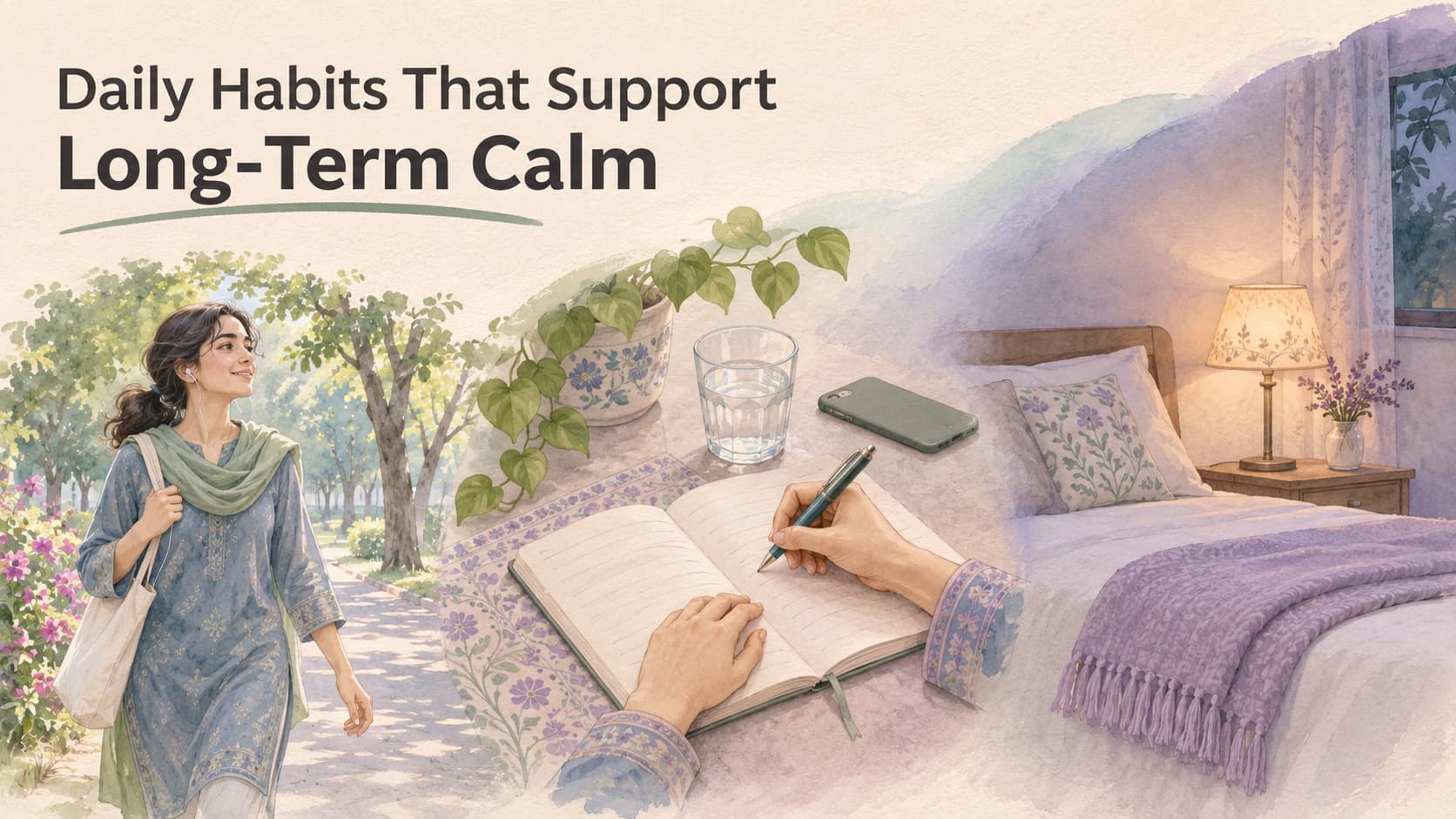
Quick techniques can help in a difficult moment. Steady routines may also support your overall wellbeing. You do not need to change everything at once. Pick one or two ideas that fit your life and build from there:
- Keep a reasonably regular sleep and wake time when possible.
- Add gentle movement to your day, such as a short walk or stretching.
- Notice whether caffeine affects your sleep or makes you feel more on edge.
- Make time for regular meals, water, and short breaks.
- Write down worries or tomorrow's tasks before winding down for bed.
- Stay connected with someone you trust, even if it is a brief check-in.
These habits are not a cure for an anxiety disorder, and what helps can vary from person to person. Consistency matters more than perfection. If you miss a day, simply start again when you are ready.
When to talk with a professional
Self-help tools can be useful, but they are not always enough. Consider speaking with a doctor or qualified mental health professional if anxiety lasts for weeks, disrupts daily life, leads to repeated panic attacks, or makes it hard to care for yourself. Reach out if you find yourself relying on alcohol or other substances to cope.
Professional support may include psychological therapies such as CBT. A healthcare professional can discuss options with you and help determine what may fit your circumstances; medication may be considered in some cases. You can find mental health practitioners on psychiatrai.
If you are in immediate danger or thinking about harming yourself, contact your local emergency service or crisis support line now, or go to the nearest emergency department.
Start with one small step
Stress and anxiety are common experiences, but you do not have to handle them alone. A gentle breathing break, a grounding exercise, or one small routine can be a place to start. If your symptoms feel heavy, keep returning, or will not ease, reaching out to a qualified professional is a reasonable next step.
You can also explore psychiatrai's self-help resources for structured exercises to work through at your own pace.
Frequently asked questions
What is the difference between stress and anxiety?
Stress is often a response to a pressure or demand. Anxiety is worry or fear about what might happen and can continue even when the original stressor has passed. They can overlap, and a professional can help if either is getting in the way of daily life.
What can I try when I feel anxious right now?
Try a few minutes of gentle, comfortable breathing or the 5-4-3-2-1 grounding exercise. You can also move to a quieter place or contact someone you trust. If a technique feels uncomfortable, stop and try something else.
Can daily habits help with stress and anxiety?
Regular sleep, movement, breaks, and noticing your response to caffeine may support wellbeing. Their effects vary, and daily habits do not replace professional care when symptoms are persistent or significantly affecting your life.
How long do calming techniques take to work?
Some people feel more settled after a short breathing or grounding exercise; others do not notice an immediate change. Routines such as sleep habits or regular movement can take time to become part of daily life. There is no single timeline that applies to everyone.
When should I seek professional help?
Consider talking with a professional if anxiety is persistent, difficult to manage, causing panic attacks, or interfering with sleep, work, study, relationships, or self-care. You can seek help before things feel severe.
Sources
External sources used to review the health information in this article.
- World Health Organization. Anxiety disorders. View source
- World Health Organization. Stress. View source
- World Health Organization. Psychological self-help interventions. View source
- National Health Service. Breathing exercises for stress. View source
- National Institute of Mental Health. Psychotherapies. View source
Related articles
How to Manage Anxiety in Pakistan: Practical Steps That Help
Learn how to manage anxiety in Pakistan with practical strategies for stress, sleep, anxious thoughts, physical symptoms, and knowing when to seek help.
By Ayesha Sohail
Overthinking and How to Control It
Learn why thoughts can get stuck in loops and try practical, evidence-informed ways to respond to overthinking with more calm and clarity.
By Ayesha Sohail
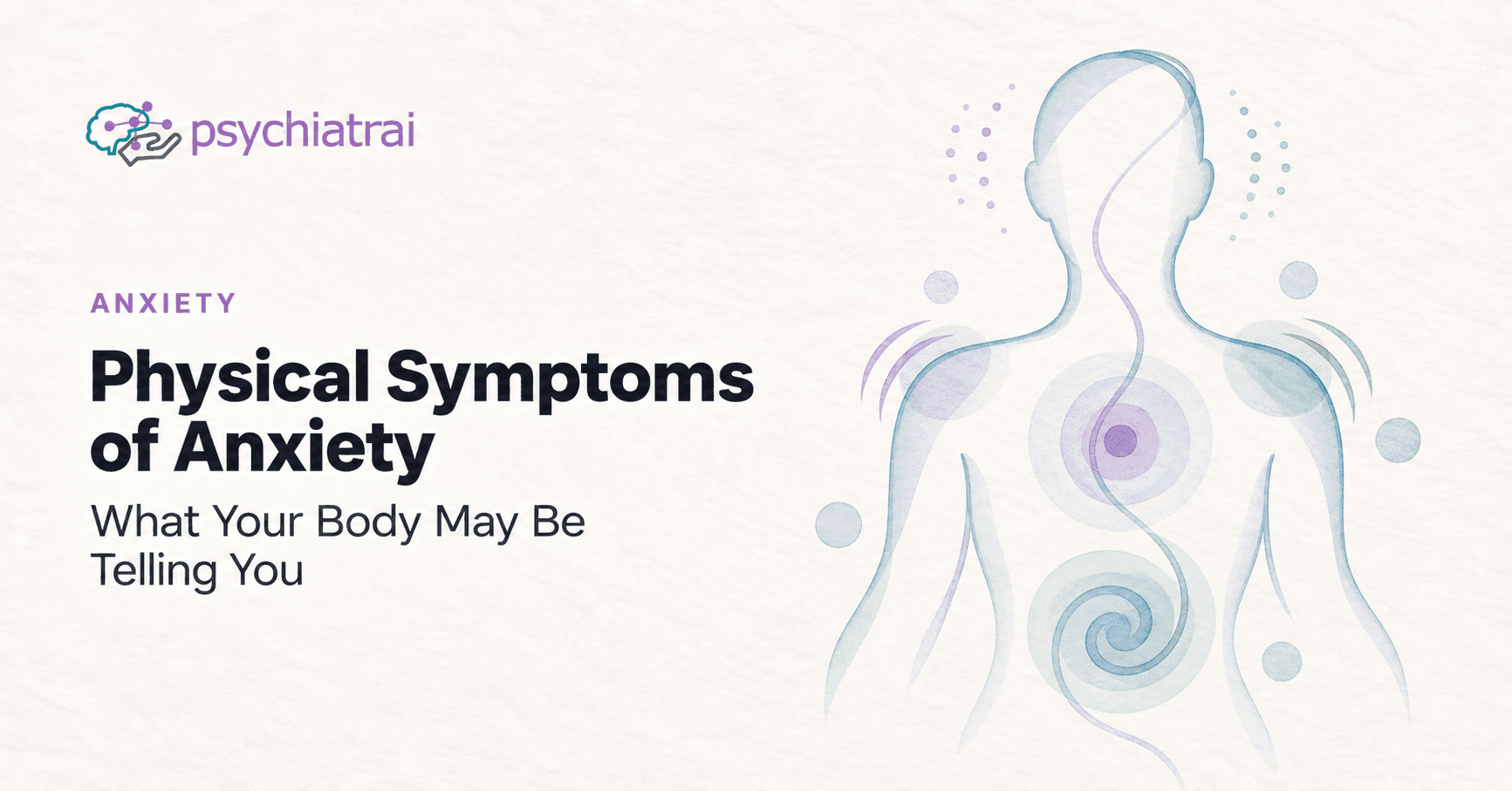
Physical Symptoms of Anxiety: What Your Body May Be Telling You
Learn the physical symptoms of anxiety, including racing heart, nausea, dizziness and sleep problems, and when to consider seeking support.
By Ayesha Sohail
Feel supported. Start today.
psychiatrai brings guided self-help programs, mental health assessments, and licensed practitioners together in one place, so you can start wherever feels right for you.
Get Started with psychiatrai p
