
Mental health guide
Overthinking and How to Control It
Learn why thoughts can get stuck in loops and try practical, evidence-informed ways to respond to overthinking with more calm and clarity.
Share this article
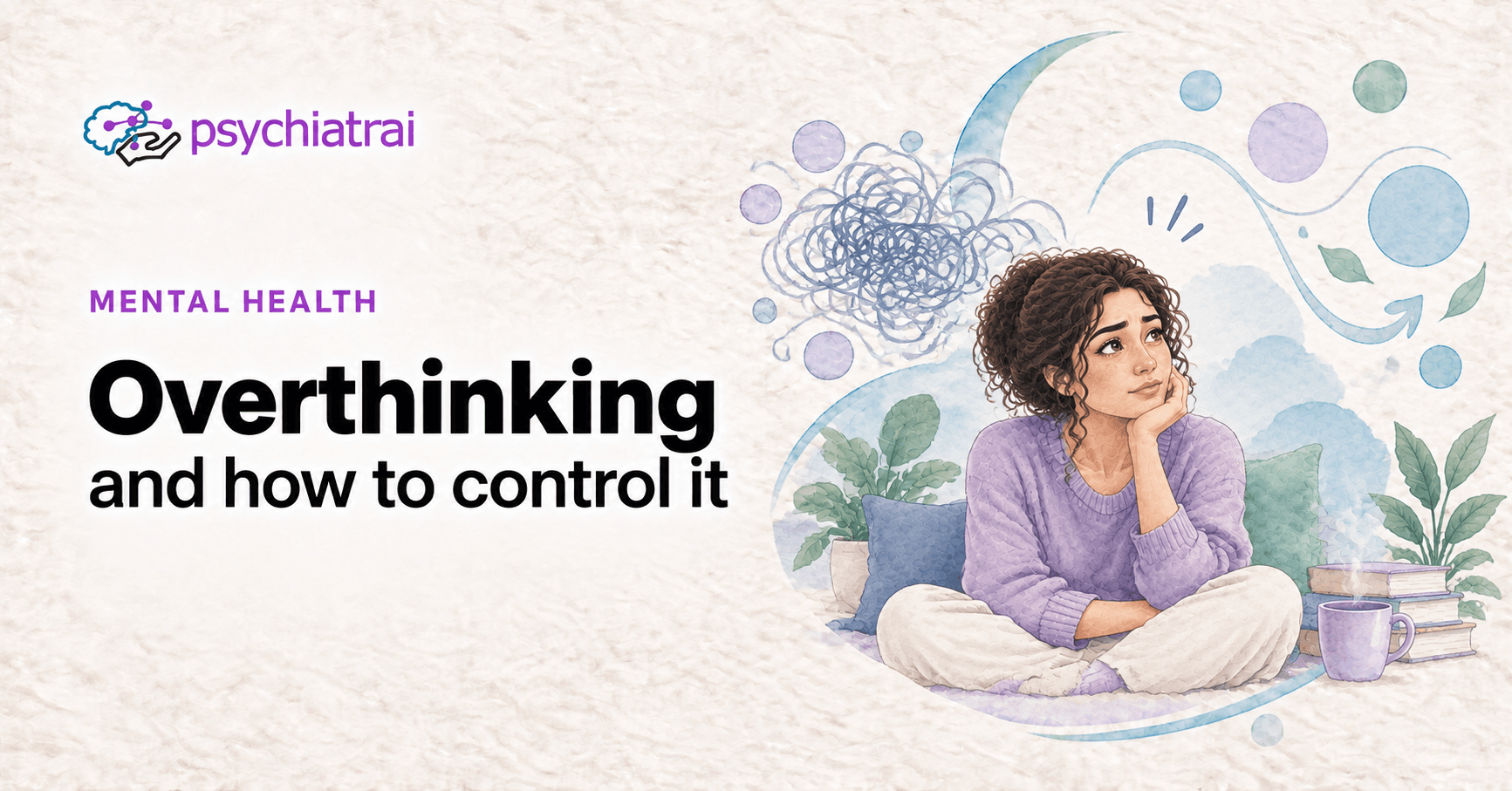
Overthinking can leave you mentally drained. You might replay a conversation, imagine everything that could go wrong, or keep second-guessing a decision. Thinking things through can help us solve problems, but repeated thoughts can become tiring when they circle without bringing new information or a next step.
“Overthinking” is an everyday term for this kind of repetitive thinking, not a diagnosis or a personality flaw. You may not be able to stop every thought from appearing, but you can practise responding to it differently.
Why Do Thoughts Get Stuck in a Loop?
Repetitive thinking may show up when something feels uncertain, emotionally important, or difficult to resolve. Your mind may revisit the situation to look for an explanation, prepare for a possible outcome, or avoid making a mistake. That effort can feel like problem-solving, even when the same questions keep returning without a useful answer.
Stress, lack of rest, high expectations, conflict, or a difficult past experience can make it harder to shift attention. These are possible influences, not a checklist or explanation that fits everyone.
Is Overthinking the Same as Anxiety?
No. Overthinking describes a pattern of thoughts; anxiety can involve worry as well as emotional and physical responses. They can overlap, but repetitive thoughts can also happen during everyday stress or uncertainty. Having them does not by itself mean you have an anxiety disorder.
If worry feels hard to manage, keeps returning, or is affecting your sleep, work, relationships, or daily activities, a mental health professional can help you understand what may be contributing. The WHO overview of stress explains that people experience stress differently and that persistent symptoms affecting daily functioning may call for support.
Common Triggers and Effects
Thought loops may be more likely around:
- An important decision or an uncertain outcome.
- A disagreement, social interaction, or fear of being judged.
- High personal standards or worry about making a mistake.
- Work, study, family, or financial pressure.
- A time when you are tired, stressed, or have fewer distractions.
The effects vary. You may find it harder to concentrate, make a decision, relax, or fall asleep. Repetitive worry can also add to feelings of stress. These experiences do not prove that anything is wrong with you, but it can help to notice when they are taking up more time or affecting your everyday life.
Practical Ways to Respond to Overthinking
These exercises are options to try, not rules. You can keep the steps that feel useful and adapt them to your circumstances.
1. Notice and name the loop
Pause and describe what is happening without judging yourself: “I’m replaying that conversation,” or “I’m imagining a worst-case outcome.” The aim is not to force the thought away, but to notice that it is a thought rather than a new fact you need to solve immediately.
2. Separate a problem from a possibility
Ask yourself: “Is there something practical I can do about this right now?” If there is, choose one small, specific action. If there is not, write the concern down and decide when you might revisit it. The NHS worry-management guide suggests setting aside a short period for worries, then returning attention to the present.
3. Check the thought gently
Try asking:
- What do I know for certain?
- What am I assuming or predicting?
- What evidence supports this thought, and what might not fit it?
- What is another realistic way to understand the situation?
You do not have to replace a difficult thought with a positive one. A more balanced or neutral view can be enough. A written thought record from NHS Every Mind Matters can guide this process. psychiatrai also offers a guided Cognitive Restructuring exercise for examining and reframing repetitive thoughts.
4. Ground yourself in the present
Notice your feet on the floor and name a few things you can see, hear, and feel around you. Take a slow, comfortable breath if that feels okay. Grounding does not make a problem disappear; it can help you reconnect with what is happening now. The WHO stress guide includes grounding and ways of creating distance from difficult thoughts.
5. Write down the worry and a next step
Putting a thought on paper can make it easier to see what it is asking of you. You could write: “What is on my mind?”, “Can I act on it?”, and “What is one small next step?” If there is nothing to do yet, note when you will check back instead of trying to solve it repeatedly.
If you would like a separate guided reflection practice, try psychiatrai’s Positive Journaling program. It can help you notice positive moments alongside the concerns on your mind.
6. Shift into one manageable activity
When you have acknowledged the thought and chosen whether action is possible, try returning to one activity in front of you. That might be making tea, taking a short walk, doing a small task, or connecting with someone you trust. It is okay if the thought comes back; you can notice it again and gently return to what you were doing.
How Therapy Can Help
If repetitive thoughts are causing distress or getting in the way of daily life, therapy can offer a space to understand the pattern and practise ways of responding. Depending on your needs, a therapist may help you explore triggers, notice links between thoughts and actions, and consider more balanced perspectives. The NHS overview of CBT describes approaches that can include questioning unhelpful thoughts and trying different ways of responding.
You can browse practitioners for online consultations through psychiatrai. If your repetitive thoughts are connected with ongoing anxiety, the GAD-7 questionnaire can help you reflect on anxiety symptoms; it is a screening tool, not a diagnosis.
Final Thoughts
Overthinking is not a personal failing, and you do not need to control every thought to feel better. Notice the loop, choose whether there is a practical next step, and try returning your attention to the present. If the pattern keeps affecting your life, you deserve support.
Explore guided self-help programsFrequently asked questions
Is overthinking a mental health disorder?
No. Overthinking is an everyday term for repetitive thinking, not a diagnosis on its own. If it is persistent or affecting your wellbeing, a qualified professional can help you explore what may be contributing.
How can I stop overthinking at night?
Try writing down what is on your mind and identifying whether there is a small action you can take tomorrow. A quiet routine, grounding, or setting aside worry time earlier in the day may also help. If it regularly disrupts your sleep, consider speaking with a professional.
Can overthinking cause anxiety?
Repetitive worry and anxiety can influence each other, but they are not the same thing. Overthinking does not automatically mean you have an anxiety disorder. If worry feels difficult to manage or is disrupting daily life, seek professional guidance.
What can I do when I notice myself overthinking?
Name the loop, check whether there is a practical action to take, and try a grounding exercise or a small activity. You could also work through psychiatrai’s guided Cognitive Restructuring exercise.
When should I seek help for overthinking?
Consider speaking with a mental health professional if repetitive thoughts are regularly affecting your sleep, relationships, studies, work, decision-making, or overall quality of life. You do not need to wait until things feel unmanageable before asking for support.
Sources
External sources used to review the health information in this article.
- World Health Organization. Doing What Matters in Times of Stress: An Illustrated Guide. View source
- World Health Organization. Stress. View source
- NHS Every Mind Matters. Tackling your worries. View source
- NHS Every Mind Matters. Thought record. View source
- NHS. Cognitive behavioural therapy (CBT). View source
Related articles
Physical Symptoms of Anxiety: What Your Body May Be Telling You
Learn the physical symptoms of anxiety, including racing heart, nausea, dizziness and sleep problems, and when to consider seeking support.
By Ayesha Sohail
Building Emotional Resilience in Daily Life
Learn how to build emotional resilience with simple daily habits. Understand stress, strengthen coping skills, and improve your wellbeing with practical steps.
By Ayesha Sohail
How to Manage Anxiety in Pakistan: Practical Steps That Help
Learn how to manage anxiety in Pakistan with practical strategies for stress, sleep, anxious thoughts, physical symptoms, and knowing when to seek help.
By Ayesha Sohail
Feel supported. Start today.
psychiatrai brings guided self-help programs, mental health assessments, and licensed practitioners together in one place, so you can start wherever feels right for you.
Get Started with psychiatrai p
