
Mental health guide
Physical Symptoms of Anxiety: What Your Body May Be Telling You
Learn the physical symptoms of anxiety, including racing heart, nausea, dizziness and sleep problems, and when to consider seeking support.
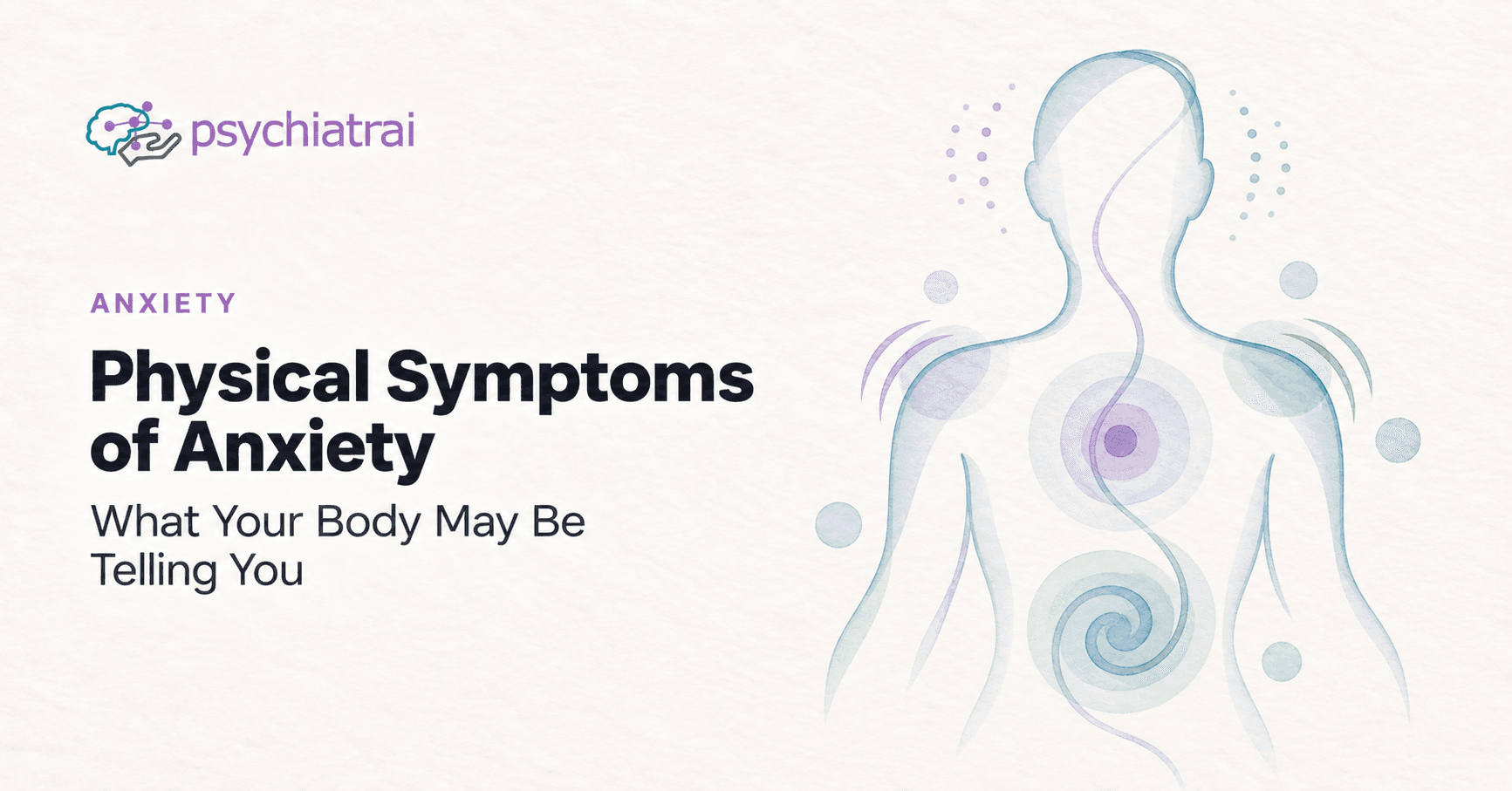
A racing heart. Tightness in your chest. A restless stomach. Shaky hands. Trouble catching your breath.
Anxiety does not only happen in your thoughts. It can show up physically, sometimes before you even realise that you're feeling anxious. These physical symptoms of anxiety can be uncomfortable and, at times, frightening. They may even leave you wondering whether something is physically wrong.
Anxiety itself is a normal response to stress. It becomes more concerning when anxiety is persistent, difficult to control, or starts interfering with everyday life. In those cases, it may be associated with an anxiety disorder.
What are the physical symptoms of anxiety?
When your brain perceives a threat or significant stress, your body can shift into a state of heightened alertness. This can affect your heart rate, breathing, muscles, digestion, and sleep.
Common physical symptoms of anxiety can include:
- Racing, pounding or noticeably faster heartbeat
- Sweating
- Shaking or trembling
- Feeling short of breath or unable to take a satisfying breath
- Dizziness or lightheadedness
- Muscle tension
- Headaches or other aches and pains
- Stomach discomfort, nausea or digestive problems
- Feeling tired or physically drained
- Difficulty falling asleep or staying asleep
- Tingling or numbness
- Feeling restless or unable to relax
Not everyone experiences anxiety in the same way. You might have several of these symptoms, only one or two, or symptoms that are not on this list. Some physical symptoms are more strongly associated with specific anxiety disorders. For example, a sudden surge of intense physical symptoms — including chest pain, shortness of breath, and a fear of something terrible happening — is characteristic of a panic attack.
Having one or more of these symptoms does not mean you have an anxiety disorder. Physical symptoms can have many possible causes, including physical health conditions, medications, sleep problems and other forms of stress.
Why does anxiety cause physical symptoms?
Your brain and body constantly communicate with each other. When your brain perceives danger or significant stress, your body can respond as though it needs to prepare for a threat.
Your heart may beat faster. Your breathing may change. Your muscles may tense. You may sweat, feel shaky, or notice changes in your stomach.
When breathing becomes faster or shallower than the body actually needs — a pattern called overbreathing or hyperventilation — it can change the balance of carbon dioxide in the blood. This is one reason anxiety can produce tingling in the hands or fingers, dizziness, and the sensation of not getting a satisfying breath. These are physical processes, not signs that something is wrong with your heart or lungs.
This reaction can happen even when there is no immediate physical danger. Anxiety can be connected to anticipated problems, uncertainty, or worries about what might happen next.
That can make anxiety particularly confusing. You might notice your heart racing before you have consciously identified what you're worried about. Or you might feel nauseous before an exam, interview, presentation or difficult conversation.
Sometimes, the physical sensation itself can then become another source of worry. You notice your heart beating quickly, become concerned about what it means, and feel more anxious as a result. The physical response is real, even when anxiety is contributing to it.
Can anxiety cause symptoms at night?
Yes. Anxiety can become particularly noticeable at night for some people.
During the day, university work, commuting, family responsibilities, conversations, social media and other activities can keep your attention occupied. When things become quieter, worries that were pushed aside may become more noticeable.
You might lie in bed thinking about an exam tomorrow, replaying something you said earlier, worrying about work, or imagining everything that could go wrong. Physical tension and persistent worry can make it harder to fall asleep.
Sleep difficulties can also become part of the cycle. Anxiety can interfere with falling or staying asleep, while poor sleep and fatigue can make it harder to cope with stress. Trouble sleeping and fatigue are among the symptoms NIMH identifies in generalized anxiety disorder.
If this happens occasionally, it does not necessarily mean you have an anxiety disorder. If it becomes a regular pattern and starts affecting your sleep or daily functioning, it may be worth talking to a healthcare professional.
Anxiety symptoms can feel very physical
One of the more unsettling things about anxiety is how convincing the physical sensations can feel.
During a panic attack, for example, someone may experience a sudden surge of intense fear along with a racing or pounding heart, sweating, trembling, dizziness, difficulty breathing, chest pain, nausea or stomach pain, tingling or numbness, chills or hot flushes, and a fear of losing control or dying. These are among the 13 physical and cognitive symptoms used to describe a panic attack in the DSM-5.
Because some of these sensations can also occur with physical health conditions, it is understandable to feel concerned.
If you experience new, severe, unusual or persistent physical symptoms, do not automatically assume they are caused by anxiety. A healthcare professional can help assess what may be contributing to them.
How can you tell if it is anxiety or something else?
There is no single physical symptom that can tell you, by itself, that you are experiencing anxiety.
Instead, it can help to look at the bigger picture. Ask yourself:
- When do the symptoms tend to appear?
- Do they happen during or after periods of worry or stress?
- How long do they last?
- Are they happening repeatedly?
- Are you also experiencing persistent worry, fear, restlessness or difficulty concentrating?
- Are they affecting your sleep, studies, work, relationships or everyday activities?
- Have you noticed physical changes that do not seem connected to your usual anxiety or stress?
Keeping track of when symptoms happen can sometimes help you notice patterns. It can also give a healthcare professional more useful information if you decide to seek support.
And sometimes, the answer is not either anxiety or a physical health issue. Both can exist at the same time.
What can help when anxiety feels physical?
There is no single approach that works for everyone, but some strategies may help you manage anxiety symptoms.
Start by noticing what your body is doing rather than immediately assuming that something is wrong. If you notice yourself becoming tense, consciously relaxing your shoulders and jaw can be a simple first step. Slow, paced breathing gently through the nose at a rate that feels comfortable can help because it corrects the overbreathing pattern that produces many of the physical symptoms described above.
Regular physical activity and stress-management techniques such as relaxation or mindfulness may also help some people. WHO recommends structured psychological interventions for adults with generalized anxiety disorder and/or panic disorder, including approaches based on cognitive behavioural therapy. It also recommends considering stress-management techniques and structured physical exercise.
Structured psychological self-help can be another option. You can try self-help tools for managing anxiety, which WHO describes as an evidence-based approach that can help people manage psychological distress and symptoms related to mental health conditions, including anxiety.
These approaches are not a substitute for professional care when symptoms are persistent, severe, or significantly affecting your life.
When should you consider professional support?
Occasional anxiety is part of being human. You do not need to seek a diagnosis every time you feel nervous before an exam or notice your heart beating faster during a stressful situation.
Professional support may be worth considering when anxiety:
- Keeps coming back or does not seem to settle
- Is difficult to control
- Regularly interferes with sleep
- Affects your studies or work
- Makes it difficult to maintain relationships or everyday routines
- Causes you to avoid situations because of fear or worry
- Leaves you frequently concerned about your physical symptoms
Anxiety disorders can be treated, and effective psychological interventions are available. A mental health professional can consider the overall pattern of your symptoms, how long they have been present, and how much they are affecting your life when determining what kind of support may be appropriate.
For someone in Pakistan, seeking mental health support can sometimes feel complicated by concerns about privacy, cost, family attitudes or stigma. You do not have to wait until things feel unbearable before asking for help. Seeking information or speaking with a mental health professional can simply be a way of understanding what is happening.
Explore professional helpA final thought
Anxiety can make your body feel like something is wrong, even when the trigger is not immediately obvious. Paying attention to those signals can be useful, but you do not have to figure out their meaning on your own.
If you are noticing several anxiety symptoms and they are beginning to interfere with your everyday life, talking with a mental health professional can be a useful starting point. They can help you understand what your symptoms mean and whether a diagnosis is appropriate.
If your symptoms are persistent, severe, unusual or concerning, consider discussing them with a qualified healthcare professional.
Take the next step with psychiatrai
If you would like to understand your mental health symptoms better, you can explore the mental health assessment options available on psychiatrai. An assessment can give you a structured way to reflect on what you have been experiencing and may help you have a more informed conversation with a mental health professional when appropriate.
Explore mental health assessmentsFrequently asked questions
What is the most common physical symptom of anxiety?
There is not one physical symptom that everyone with anxiety experiences. Racing or pounding heart, sweating, trembling, muscle tension, dizziness, breathing changes and stomach discomfort are among the symptoms that can occur.
Can anxiety cause chest pain?
Chest pain can occur during a panic attack. However, chest pain can also have other causes. New, severe or concerning chest pain should not automatically be attributed to anxiety. If you are unsure about the cause, seek appropriate medical evaluation.
Can anxiety make you feel sick?
Yes. Anxiety can be associated with nausea and other stomach or digestive symptoms. These physical sensations can occur alongside the body's response to stress and anxiety.
Why does my anxiety get worse at night?
Night-time can mean fewer distractions, giving worries more room to surface. Anxiety can also make it harder to fall asleep or stay asleep. If this happens regularly, particularly if poor sleep is affecting your daytime functioning, consider discussing it with a healthcare professional.
Do physical symptoms mean I have an anxiety disorder?
No. Physical symptoms alone are not enough to establish an anxiety disorder. Anxiety disorders involve patterns of excessive fear or worry and other symptoms that persist and cause significant distress or interfere with daily life. A professional assessment can help clarify what may be happening.
Sources
External sources used to review the health information in this article.
- National Institute of Mental Health (NIMH). Generalized Anxiety Disorder: What You Need to Know. View source
- World Health Organization (WHO). Anxiety disorders. View source
- World Health Organization (WHO). Psychological self-help interventions. View source
Related articles
How to Manage Anxiety in Pakistan: Practical Steps That Help
Learn how to manage anxiety in Pakistan with practical strategies for stress, sleep, anxious thoughts, physical symptoms, and knowing when to seek help.
By Ayesha Sohail · 7 September 2026
Building Emotional Resilience in Daily Life
Learn how to build emotional resilience with simple daily habits. Understand stress, strengthen coping skills, and improve your wellbeing with practical steps.
By Ayesha Sohail · 17 September 2026
Understanding Mental Health: Signs, Self-Care & Support
Learn what mental health means, which changes may deserve attention, practical ways to support your wellbeing, and when professional help may be useful.
By Ayesha Sohail · 28 July 2026
Feel supported. Start today.
psychiatrai brings guided self-help programs, mental health assessments, and licensed practitioners together in one place, so you can start wherever feels right for you.
Get Started with psychiatrai p
p