
Mental health guide
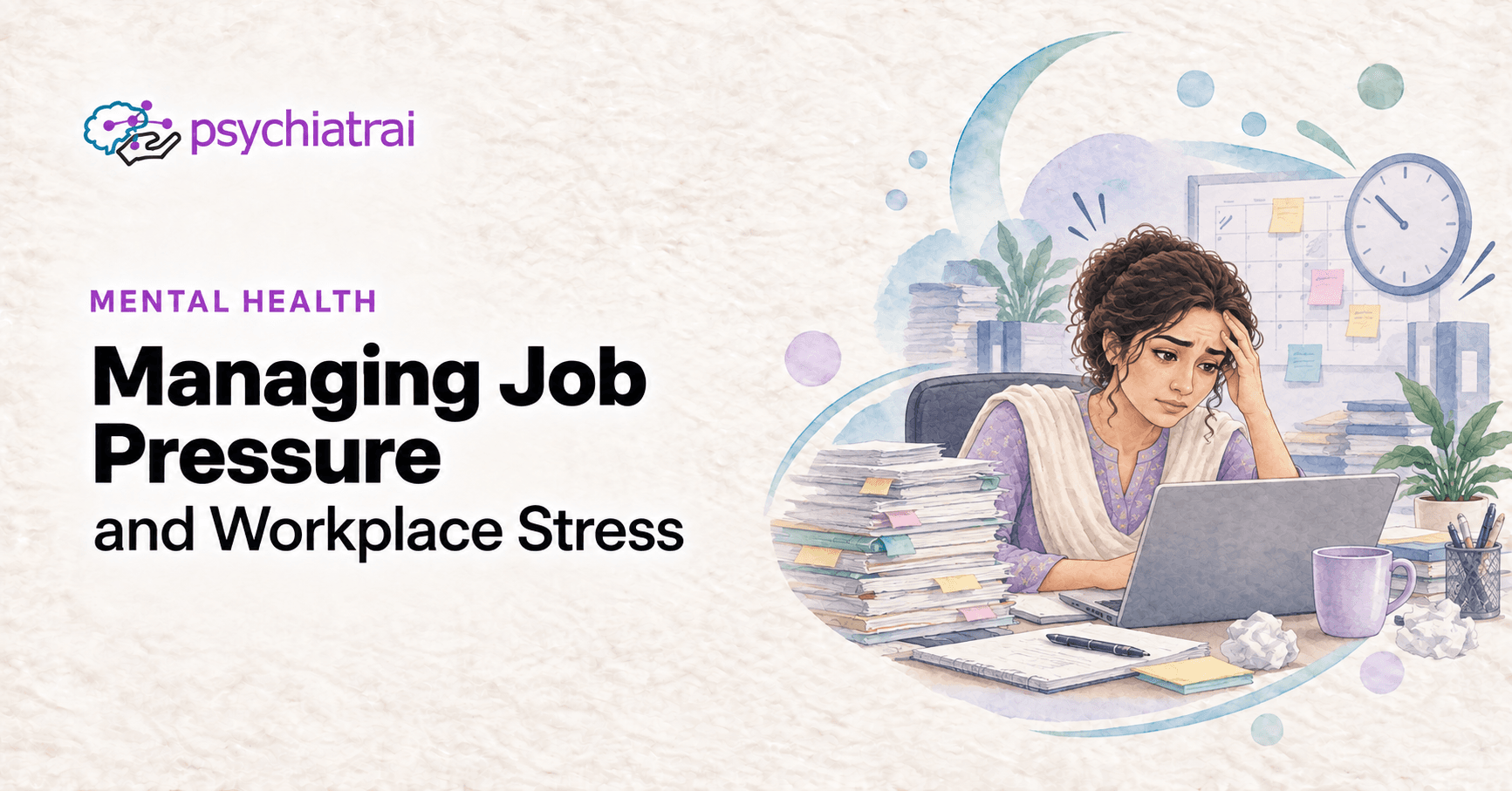
Managing Job Pressure and Workplace Stress
Learn practical ways to manage job pressure and workplace stress, set boundaries, and recognize when extra support may help.
Share this article
Busy periods are part of many jobs, but constant pressure can wear you down. Late messages, back-to-back deadlines, unclear expectations, or worries about job security can make it difficult to switch off and care for your wellbeing.
Job stress can arise when work demands do not match a person's resources, needs, or ability to meet them. It is shaped by the work environment as well as by individual circumstances, so managing it is not always a matter of trying harder or becoming more productive. The World Health Organization's guidance on mental health at work describes workplace risks such as excessive workloads, long hours, low control, and limited support.
The Hidden Cost of Constant Pressure
Stress can affect people differently. You might feel tense before work, find it hard to concentrate, or have little energy left for the rest of your day. A demanding period does not automatically mean you are burned out, but ongoing pressure deserves attention—especially if it is affecting your health, relationships, or ability to manage everyday responsibilities.
The WHO describes burnout as an occupational phenomenon related to chronic workplace stress that has not been successfully managed. It involves exhaustion, increased mental distance or cynicism about one's job, and reduced professional effectiveness. Burnout is not classified as a medical condition, and this term applies specifically to work-related experiences. Read the WHO explanation of burnout for more detail.
What Causes Workplace Stress?
Workplace stress often builds from a combination of pressures. Common contributors include:
- Unrealistic workloads, understaffing, or deadlines that leave no room to recover.
- Unclear responsibilities or conflicting expectations.
- Long, inflexible, or unsocial work hours.
- Limited control over how work is done or prioritized.
- A lack of support from supervisors or colleagues.
- Job insecurity, financial pressure, bullying, or discrimination.
- Work demands that conflict with caregiving or other responsibilities.
These conditions are not always within one person's control. Employers and managers also have a role in identifying and reducing workplace risks, improving communication, and making reasonable adjustments where possible.
How Stress Can Show Up Mentally and Physically
People respond to pressure in different ways. You might notice:
- Headaches, muscle tension, or persistent tiredness.
- Irritability, worry, low mood, or feeling emotionally numb.
- Trouble focusing, remembering details, or making decisions.
- Changes in sleep or appetite.
- Withdrawing from people or activities you usually enjoy.
- Feeling detached from work or doubtful about your ability to do it.
These signs do not by themselves identify a specific condition. They can have many causes. The WHO overview of stress explains that stress can affect both the mind and body, and that symptoms vary from person to person. Pay attention to changes that persist, worsen, or interfere with daily life, and consider discussing them with a health professional.
Practical Ways to Manage Job Pressure
Small steps may help make a difficult workday more manageable. They will not remove every source of pressure, and they do not replace changes to an unhealthy workload or work environment.
- Choose a realistic next step. Break a large task into smaller actions. If several things feel urgent, list them and ask your supervisor to help confirm priorities.
- Take brief pauses. When you can, step away from your screen, stretch, breathe slowly, or get some fresh air. Short breaks can give you a moment to reset your attention.
- Talk about what is manageable. Tell a trusted colleague or supervisor when the workload is becoming difficult to sustain. Be specific about the tasks, deadlines, and support that could help.
- Make room for recovery. Movement, regular meals, rest, and time with supportive people can support general wellbeing. Choose small routines that fit your circumstances; there is no single routine that works for everyone.
- Give yourself time away from work. If your role allows it, set a time to stop checking non-urgent messages and protect breaks or time off. If that is difficult, consider what boundary or change may be realistic to discuss.
The WHO stress guidance includes practical approaches for coping with stress. These may be useful alongside steps to address the pressures causing it.
Setting Boundaries and Building Balance
Boundaries can help protect rest and make expectations clearer, though they may not be possible in every job or situation. You might reflect on questions such as:
- Do I feel expected to respond to non-urgent work messages late at night?
- Am I regularly missing breaks or working beyond my agreed hours?
- Do I understand which tasks should take priority?
- Is there someone I can speak with about a workload that is not sustainable?
Depending on your circumstances, a boundary could mean turning off notifications after an agreed time, taking your scheduled break, asking for clearer priorities, or saying when you cannot take on additional work without adjusting another deadline. If you have limited control over these choices, that is useful information to raise with a supervisor, worker representative, or another trusted source of support.
When to Seek Help and How Online Therapy Can Support You
Consider reaching out for professional support if stress is persistent, getting harder to manage, or affecting your sleep, mood, relationships, physical health, or daily responsibilities. You do not need to wait until you reach a breaking point.
A therapist can help you understand what you are experiencing, explore coping strategies, and decide what support may suit your needs. Therapy may help with the emotional effects of work pressure, while workplace changes may still be needed to address the conditions contributing to it.
If you would like a guided starting point, explore psychiatrai's self-help programs. You can also use mental health questionnaires to reflect on what you are experiencing; questionnaires are not diagnoses and do not replace a professional assessment.
If you would like to explore virtual support, you can browse practitioners for online consultations through psychiatrai. You can ask about a practitioner's experience, approach, fees, and session format before deciding whether to book.
Final Thoughts
Work can bring meaning and connection, but persistent pressure can take a toll. Notice what is affecting you, try changes that feel realistic, and seek support when you need it. The goal is not to manage every difficult workplace alone; clear communication and healthier working conditions matter too.
Find a practitioner to consult onlineFrequently asked questions
What are common signs of workplace stress?
Workplace stress may show up as tiredness, headaches, irritability, difficulty concentrating, changes in sleep or appetite, or feeling emotionally drained. These experiences can have different causes, so consider professional advice if they persist or interfere with daily life.
How can I manage job pressure without leaving my job?
You could start by identifying the most urgent tasks, breaking work into smaller steps, taking available breaks, and discussing priorities or deadlines with a supervisor. If the pressure continues, consider seeking professional support and asking what workplace adjustments may be possible.
How do I set boundaries at work?
Start with a small, specific request that fits your situation—for example, clarifying priorities, protecting a scheduled break, or agreeing when non-urgent messages need a response. Some people have less control over work hours or workload; if so, a supervisor, worker representative, or trusted colleague may help you explore options.
Can workplace stress lead to burnout?
Chronic workplace stress that is not successfully managed can contribute to burnout. WHO describes burnout through exhaustion, increased mental distance or cynicism about one's job, and reduced professional effectiveness. If these experiences are affecting your wellbeing, consider speaking with a qualified professional.
When should I seek professional help for work-related stress?
Consider seeking help if stress is persistent, worsening, or affecting your sleep, mood, relationships, health, or ability to manage everyday responsibilities. A mental health professional can help you understand what you are experiencing and discuss support options.
Sources
External sources used to review the health information in this article.
- World Health Organization. Mental health at work. View source
- World Health Organization. Burn-out an occupational phenomenon. View source
- World Health Organization. Stress. View source
- National Institute for Occupational Safety and Health. Stress and Work. View source
Related articles

Physical Symptoms of Anxiety: What Your Body May Be Telling You
Learn the physical symptoms of anxiety, including racing heart, nausea, dizziness and sleep problems, and when to consider seeking support.
By Ayesha Sohail
Building Emotional Resilience in Daily Life
Learn how to build emotional resilience with simple daily habits. Understand stress, strengthen coping skills, and improve your wellbeing with practical steps.
By Ayesha Sohail
How to Manage Anxiety in Pakistan: Practical Steps That Help
Learn how to manage anxiety in Pakistan with practical strategies for stress, sleep, anxious thoughts, physical symptoms, and knowing when to seek help.
By Ayesha Sohail
Feel supported. Start today.
psychiatrai brings guided self-help programs, mental health assessments, and licensed practitioners together in one place, so you can start wherever feels right for you.
Get Started with psychiatrai p
